Feline Obesity

Taken from the Cornell Feline Health Center
Feline obesity—generally viewed as body weight that is 20 percent or more above normal weight—is the most frequently observed nutritional disorder among domestic cats. Its clinical signs are clearly apparent and, when observed, should be taken seriously and addressed without delay.
In itself, obesity will certainly inhibit a cat’s normal penchant for physical activity and surely compromise its quality of life. Significant overweight can also exacerbate several serious disorders. Among the conditions potentially aggravated by obesity are osteoarthritis, hip dysplasia, and diabetes mellitus. Cardiovascular health can also be impaired by obesity, since excessive weight places an extra burden on a cat’s heart and vascular system.
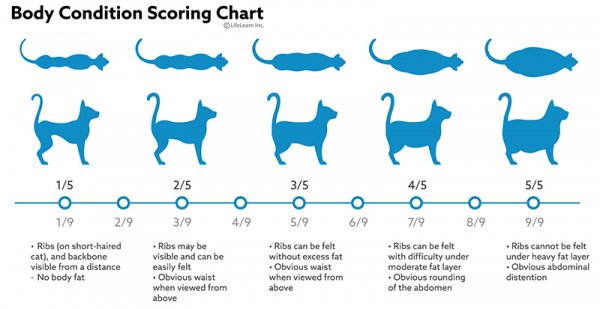
To assess the weight status of a cat, some veterinarians may use a nine-point scoring system, with score of 4.5 to 5 points indicating that an animal is at its ideal weight. A score of 9 would mean that a cat is grossly obese, while an emaciated, severely underweight cat would have a score of 1. Any cat that has a score above 6.5 or 7 would be classified as overweight, and a score of 8 or above would mean that the animal is severely overweight or obese.
An owner can also assess a cat’s physique by using a “Body Condition Score” chart.
According to Dr. McDaniel, a major factor responsible for feline obesity is the practice of “free feeding,” in which a bowl of dry food is available for consumption by a cat throughout the day. Accordingly, she says: “Use canned food, which typically has a higher protein and lower carbohydrate content than kibbles. Since canned food is 90 percent water, this will also increase the cat’s fluid intake.” In addition, she points out, the use of canned food encourages “feeding meals” rather than allowing the animal to consume excessive amounts of dry food that is made constantly available. “We should be feeding meals to our cats—not allowing them to eat whenever they want to,” she advises. “There should be a distinct meal time, and the owner should be in control of it.”
Any feline weight-reduction program should be carried out under the direction of a veterinarian, Dr. McDaniel advises. “A cat that is put on a sudden starvation diet,” she warns, “is at risk of developing a serious health problem, such as hepatic lipidosis. What you want to aim for is a gradual weight loss, perhaps one or two percent loss of body weight per week. I always recommend that an owner of a chubby cat purchase a baby scale in order to monitor a cat’s weight at home. Gradual is the way to go!”


Recent Posts

Categories